


A Lawful Development Certificate can provide formal evidence of planning lawfulness. The quality of the result depends on defining the development precisely and supplying the facts and drawings needed to test it.
Two main types of Lawful Development Certificate
GOV.UK distinguishes between certificates for existing matters under section 191 of the Town and Country Planning Act 1990 and certificates for proposed matters under section 192.
| Type | What it can confirm | Typical use |
|---|---|---|
| Existing use or development | That an existing use, operational development or certain activity is lawful for planning purposes. | Formalising an established planning position where the legal tests are satisfied. |
| Proposed use or development | That a proposed use or operation would be lawful if carried out as described. | Obtaining formal confirmation that a house extension, loft or other proposal does not require a normal planning application. |
What an LDC does — and what it does not do
An LDC deals with lawfulness under planning legislation. It does not ask the authority whether the design is attractive or whether it would have granted planning permission as a matter of planning judgement. For a proposed certificate, the core question is whether the operation would be lawful if it began on the application date.
That also means the certificate is only as useful as the description and drawings it covers. If the eventual work materially differs, the certificate may not answer the new situation. GOV.UK also explains that a later material change in law or an Article 4 direction before proposed development begins can affect reliance on a section 192 certificate.
What information normally supports an LDC application?
GOV.UK requires enough factual information or evidence for the authority to decide the application, along with the relevant fee. The application should describe precisely what is being applied for and identify the land involved. Depending on the case, supporting material may include:
- a location plan and clearly identified application site;
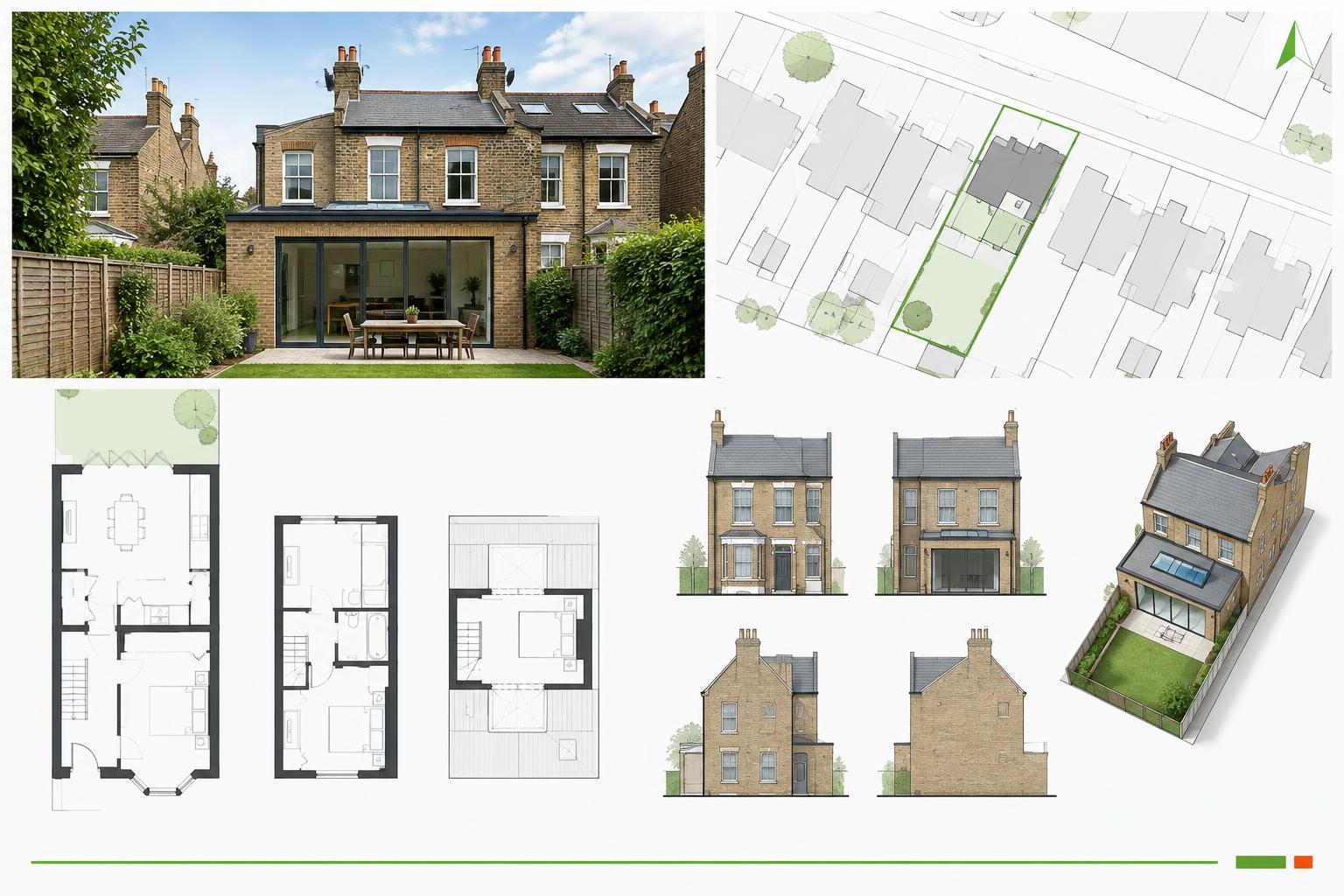
- existing and proposed plans, elevations, roof plans or sections where geometry is relevant;
- dimensions that demonstrate compliance with the permitted development class being relied on;
- planning history or evidence about when existing work or use began, for an existing certificate;
- photographs, records, statutory declarations or other factual evidence where relevant.
The exact evidence depends on the legal question. Do not copy a generic document list without checking the current form and the Local Planning Authority requirements.
Why dimensions matter for proposed permitted development
Many householder permitted development rights depend on measurable limits: extension depth, height, width, roof volume, eaves relationships or window positions. If an LDC application relies on those rules, the drawings need enough accuracy to show the proposal falls within them. A measured survey can provide the existing geometry on which the proposed drawings and calculations are based.

When an LDC is worth considering
You want formal evidence
You believe the project is permitted development but want more than an informal view.
The property may be sold or refinanced
A formal certificate can be useful evidence in later conveyancing or lender enquiries, although legal advisers decide what they require.
The project is close to a limit
Where lawfulness turns on dimensions or technical definitions, a formal determination can reduce uncertainty before construction.
You need to establish an existing position
An existing LDC can address whether existing use or operational development is lawful, subject to the relevant legal tests and evidence.
An LDC does not replace other approvals
GOV.UK is explicit that a lawful development certificate relates to planning lawfulness and does not remove the need to comply with other regimes. Building Regulations, listed building controls, lease obligations and other legal requirements may still apply.
Related planning guides
FAQ
Can an LDC be refused even if the work might be lawful?
Yes. GOV.UK notes that a refusal can reflect insufficient evidence rather than proving that the development is unlawful. The application must provide enough precise information for the authority to decide the legal test.
Is an LDC mandatory for permitted development?
Not generally. It is a route to formal confirmation of lawfulness. Some owners choose it for certainty or future records.
Can planning rules change after an LDC is granted?
Yes. For proposed development, GOV.UK explains that a material change before work begins, such as a relevant statutory amendment or Article 4 direction, can affect the position.
Official sources
Official guidance checked on 22 September 2026. The links below should be checked again when you use this article because rules and local requirements may change.
- Lawful development certificates — GOV.UK / MHCLG
- When is permission required? — GOV.UK / MHCLG
- Permitted development rights for householders: technical guidance — GOV.UK / MHCLG
- Building regulations approval: when you need approval — GOV.UK
